
Tags
Auschwitz, Dagmar Herzog, David Irving, Disability, eugenics, Euthanasia program, history, Holocaust, Holocaust Denial, Holocaust Education, Holocaust memory, Josef Mengele, NotoAI, Pseudohistory, representation, T4 program
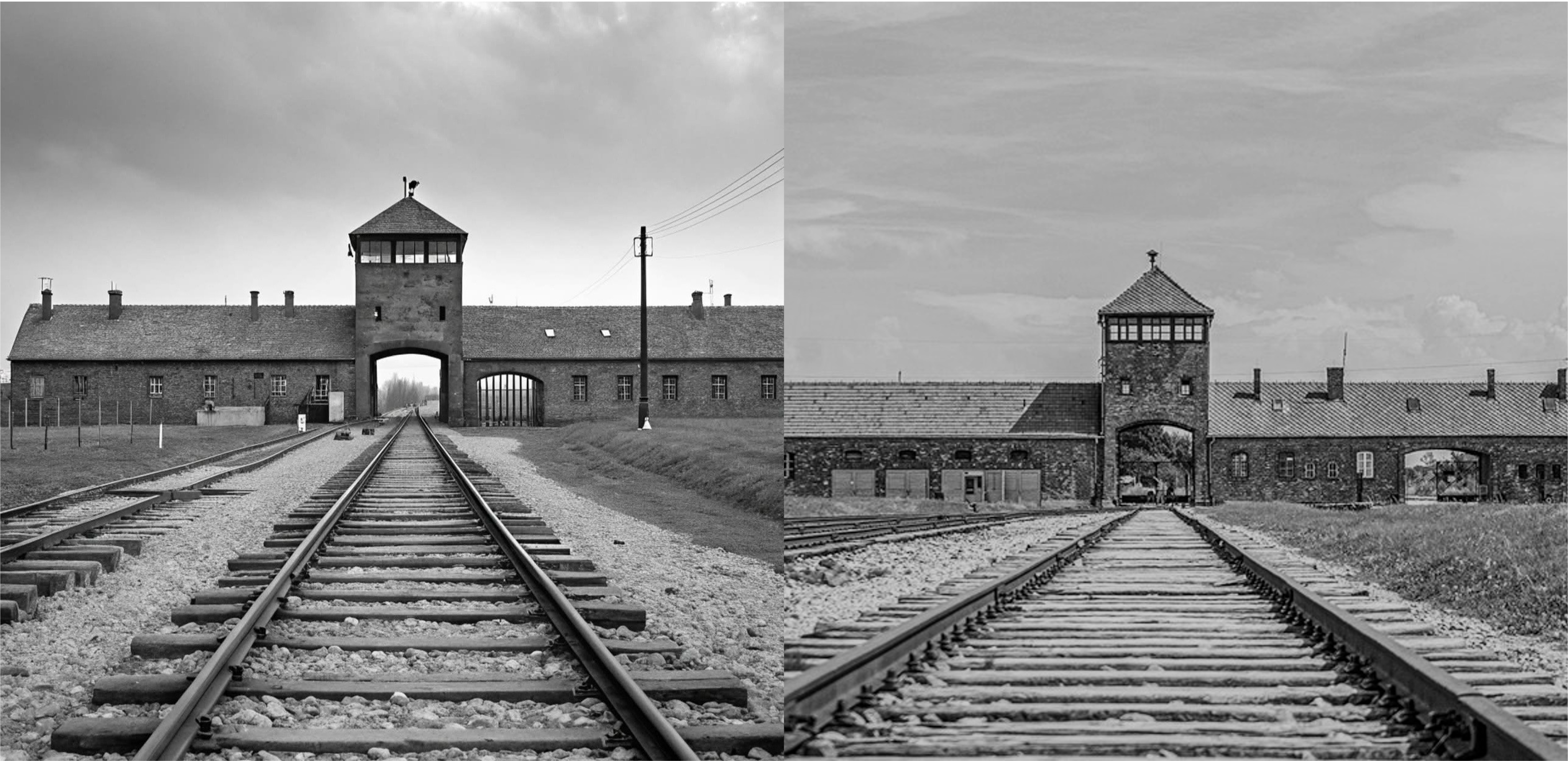
I once had an interesting discussion about whether it was possible to deny the historical truth of the Holocaust without being antisemitic. I quipped at the time that I thought it was perhaps theoretically possible, but that I’d never seen it done.
For the avoidance of doubt, I believe that denying the Holocaust (including “softer” forms of denial now classed as Holocaust distortion) is inherently wrong and offensive to all Jews everywhere. But it is especially offensive to survivors and their descendants who have to endure the reduction of their suffering to a side issue in an attempt to “debate” what should be incontestable. Namely, that the Nazis and their collaborators across occupied Europe killed six million men, women and children ideologically defined as Jews.
This is on my mind because, as is the way sometimes of social media, I have spent far too much time this weekend defending the right to term eugenics (in the present) a pseudoscience. The spur was a post by Dr. Aparna Nair (a historian of disability and colonialism who can be followed at @disabilitystor1.bsky.social) on Bluesky, which ran:
It is entirely possible and easy to disavow the ideas and ideologies of eugenics and scientific racism etc without reifying the idea that these are not part of the ‘legitimate’ histories of science.
I agree. And to show I agree, I posted the following :
I would distinguish between people who believed in them historically, to whom they had the power and legitimacy of science, and those who persist with them now, who should know better. For the latter, I think “pseudoscience” fits.
Since I think they’re wrong, but possessed of good intentions, I’m not going to quote or identify my two subsequent interlocutors here. But I will say that they seemed very concerned that I understood the following:
Firstly, that eugenics was by no means absent from modern science, especially medicine. And that this translates into persistent negative outcomes based on gender and ethnic background.
I’m well aware of this, as well as of the undeniable crimes committed as a result. For example, Josef Mengele is notorious for his experiments on inmates in Auschwitz II-Birkenau. Among many other hideous things, particularly in relation to twins, he was responsible for the obtaining of “samples” (i.e. body parts from prisoners) to support the work of his doctoral supervisor, Otmar von Verschuer, then head of the Kaiser Wilhelm Institute of Anthropology, Human Heredity, and Eugenics in Berlin. Verschuer’s predecessor was Professor Eugen Fischer, with whom Verschuer conducted research (funded by the Rockefeller Foundation) on twins in 1932. Fischer, who in 1938 individually interviewed mixed-race German children and signed off on their sterilisation, had started his career with a 1913 study entitled The Rehoboth Bastards; about the mixed-race offspring of German men and African women in German South-West Africa (now Namibia). Between 1904 and 1908, German forces carried out a genocide against the Herero and Nama peoples. In 1924, the then-standard textbook in anthropology and eugenics co-authored by Fischer (partly due to the success of his work on Namibia) was one of the books sent by his publisher to another prospective author: Adolf Hitler, in jail following the attempted Munich Putsch. For these and many other reasons, I am extremely aware of the ways in which scientists can perform atrocities. That they believed these ideas to be “scientific” does not change their guilt.
Moreover, while recently reading Dagmar Herzog’s superb The Question of Unworthy Life: Eugenics and Germany’s Twentieth Century, I was really moved by the idea of a “fascism in the head” with which we must still struggle. Herzog illustrates how a consensus on “unworthy life” crystallised shortly after WW1 out of eighteenth- and nineteenth-century attempts to (mostly compassionately) institutionalise people with a broad range of psychological, psychiatric and learning disabilities. Combined with eugenic thought, this resulted in the still insufficiently understood (and insufficiently taught) murder of the inhabitants of these institutions under the Nazis. Finally, though, Herzog demonstrates how conditions and even staff in many of these places persisted post-war. The murder of at least 300,000 people (see Alex Kay’s Empire of Destruction, 2021) should have been enough to change things. But it wasn’t, in either East or West Germany, because the inhabitants of institutions were still “unworthy” of life and dignity.
The horrors of WW2 weren’t even enough to shift attitudes about disability in the UK. The treatment of thalidomide-affected babies included (as movingly depicted in Call the Midwife) leaving them to die alone in cold rooms. If you question whether this is an appropriate citation in this context, in response to a recent query by email to the Thalidomide Trust, I was directed to the still mostly sealed testimonies in their oral history project. (https://wellcomecollection.org/works/d32pgtn4 ) There will be a reckoning at some point, but not yet. But for now let us acknowledge that fascism was not just present in German heads.
Secondly, however, there seemed to be concern about the feelings of those still espousing eugenics or denying the Holocaust today. Was it fair, someone asked, to dismiss them with a single word?
Yes, was my response. And in the case of Holocaust deniers, that word would be “pseudohistorians,” because while they claim to be talking about the past, they do not subscribe to the practical or ethical standards which constitute the craft of the historian. For example, you cannot, as the late and unlamented Robert Faurisson claimed, read a document only in reference to itself. You cannot, as David Irving did, wilfully mistranslate documents to change their meanings.* Just as a eugenicist is no longer “doing science” by importing discredited and racialised value judgements, these people are not “doing history” – which is always engaged in constructing an account of the past based on the traces (plural) of that past as they relate to and inform each other. Instead, Holocaust deniers are intent on attacking the dense web of evidence and source material that makes the fact of the Holocaust incontrovertible. To do so, paraphrasing Mr. Justice Gray in his judgment against David Irving, Holocaust deniers “persistently and deliberately misrepresent and manipulate historical evidence” for their own ideological reasons.
Do bad questions and problematic assumptions sometimes produce bad history? Absolutely. There are many historians whose work proceeds from problematic and controversial premises, with a resulting weakness of conclusions. Because those premises almost always result in problems with their selection and analysis of sources. In other words, it may be bad history, but it’s still history, and open to critique on those grounds. (And yes, of course, most of those I criticise would disagree with my disagreements. That is very much how and why historical conferences exist.)
As for those who parrot these views (whether the pseudoscience of eugenics or the pseudohistory of Holocaust denial) can we dismiss them so easily?
It is of course possible to be misinformed and misled in good faith. It is also entirely possible to be unaware that such beliefs are offensive – though I would question how one could be unaware of this now. There is too much evidence, too many books, films, plays and every cultural product imaginable to say “I didn’t realise” without also admitting that one’s education has fallen short. (And I acknowledge that there are many other areas where this may be true of me: I’m the product of an education system which specialises far too soon, as well as temperamentally someone who knows a lot about relatively few things.) What is decisive is whether people acknowledge their mistakes and concede that others may have invested considerable effort in constructing their understanding for themselves.
In my own case, I’ve spent my adult life teaching and learning about the Holocaust. I’ve conducted primary research on some issues, and rely on the work of other scholars for the rest. In the last year, I’ve noticed how many of my responses to Holocaust distortion in AI-fabricated “historical images” have been countered with the argument that my Ph.D. in Holocaust Studies is less important than “what really happened.” But as historians we do not have “what really happened” available to us. We have knowledge of the sources and how they combine to create an understanding of the past. Since AI is being used to fabricate “documents” it is my duty as a historian and responsible citizen to challenge them. If that makes people uncomfortable or embarrassed at having been fooled, I’m sorry. But the integrity of the historical sources is not negotiable. Or else we will slide into a mire of illusion and false enchantment which will make meaningful discussion almost impossible. From pseudo-sources there will only come pseudohistory.
*See Richard Evans, Telling Lies About Hitler and Robert Jan van Pelt, The Case for Auschwitz, for superb explorations of Irving’s malfeasance, the evidence he ignored and/or manipulated, and his ultimate inability to sustain his pretensions to historical truth.
Note: I’m now registered with Buy Me a Coffee: if you found this post useful or interesting, please consider sending me a small amount to help me do more. Thank you! https://coff.ee/jaimeashworth
 framingthequestion