Heritage Politics

Tags

, , , , , , , , ,

Image

Photo: Jaime Ashworth, 2013.

Seventy years ago last night, nineteen Lancaster bombers left RAF Scampton in Lincolnshire. 617 Squadron had been formed only a few weeks earlier, its mission a secret even from the pilots and crews. They had only been told of their objective – to break the dams of the Ruhr valley and thus disrupt German industry – earlier that day. The following morning, on 17 May, 1943, the surviving eleven crews returned – some all but crashing on the base perimeter – and a legend was born.

This is a story that will be told a lot today: the last few weeks have seen a wave of publications, supplements and television documentaries. BBC Radio 2 will spend the entire day commemorating the raid, its presenters broadcasting from Scampton and Biggin Hill before a concert in the evening. The trailers for this have been a regular feature on Radio 2, portraying the raid as a feat of courage and technical accomplishment: as Dan Snow puts it in an article for the BBC News website, a ‘combination of science, flying skill, grit and the obvious impact of the raids’. In short, the story as it has been told and retold since 1943, especially in the 1954 film starring Richard Todd (as Guy Gibson, the commander of the raid) and Michael Redgrave (as Barnes Wallis, the inventor of the bouncing bomb).

Like any operation by Bomber Command during World War 2, the Dambusters Raid has been the subject of intense debate, with no clear consensus on whether the raid achieved its short or long-term objectives. The authors of the official history of the Strategic Air Offensive, Sir Charles Webster and Noble Frankland (a veteran of Bomber Command and subsequently Director of the Imperial War Museum) dismissed the raid’s impact as overrated. And the civilian cost of the raid was huge: approximately 1650 people were killed in the towns and villages beneath the Möhne Dam. From their aircraft, the crews watched the impact of their breaching of the dam. Guy Gibson recounted:

Image

Guy Gibson (second from left) was 24 when he commanded the raid. He died in 1944 over Germany. IWM Photos.

It was the most amazing sight. The whole valley was beginning to fill with fog from the steam of the gushing water, and down in the foggy valley we saw cars speeding along the roads in front of this great wave of water, which was chasing them and going faster than they could ever hope to go. I saw their headlights burning and I saw water overtake them, wave by wave, and then the colour of the headlights underneath the water changing from light blue to green, from green to dark purple, until there was no longer anything except the water, bouncing down in great waves. The floods raced on, carrying with them as they went viaducts, railways, bridges and everything that stood in their path.

One survivor of the floods described what happened when the wave reached a labour camp where Ukrainian women were imprisoned.

Most were locked into their barracks and couldn’t get out. They were trapped inside the barracks as they were swept down until they came to the concrete bridge, where they were smashed to pieces. The terrible screams of the women trapped inside still rings in my ears.

Whatever the arguments about disruption of economic production – and Albert Speer made clear after the war that had the raid been exploited further it might have had serious consequences – the human cost was both immense and unavoidable. If the objective is to knock down a dam holding back millions of tons of water, the only way to do so without widespread and indiscriminate loss of life is to give a warning. Since the element of surprise was integral to the success of the operation, along with the necessity that water levels be at their highest, the civilian casualties have to be seen as at the very least an anticipated consequence of the mission. The moral questions about the raid mirror the broader questions around the Bomber Offensive, something which will certainly be revisited in the context of other forthcoming anniversaries, most notably (I suspect) that of the Dresden bombing in 1945. In that context, it is worth remembering as well that the Dams raid was codenamed Chastise.

In the meantime, though, a thought about the broader issues. In addition to the Dambusters and David Beckham, the news this week has focused on the progressive implosion of the Conservative Party over Europe, a process catalysed by the startling success of UKIP in the recent local elections. As entertaining as this is in terms of political theatre, I was struck by a tweet from Robert Eaglestone of Royal Holloway (@BobEaglestone if you’re on Twitter) who pointed out that ‘a problem with UKIP is that they believe the last thing to ‘happen’ in UK is WW2, so they create an odd ‘heritage’ politics.’ My response was this: surely the odd thing is that heritage politics are not perceived as strange?

The air war of World War Two has a particular and peculiar hold over us. The Battle of Britain Memorial Flight is a standard part of our pageantry: witness the role of the iconic aircraft as part of the 2012 Jubilee and the 2011 Royal Wedding. Perhaps for the Jubilee it was comprehensible – the Queen is after all the last surviving head of state to serve in uniform during the conflict. But for the wedding of two people born almost forty years after the war it is curious. We are in a Barthesian mythology, where the constraints of the metalanguage in which we speak make the contingent and strange appear natural. To illustrate the strangeness, look at the photo at the top of this post, taken last week in a pub in Guildford. And ask yourself what would be the reaction if there were a German beer called Messerschmitt?

Quotations from the crews and witnesses taken from Max Arthur, Dambusters: A Landmark Oral History, Virgin Books, London 2009. ‘Friday Night is Music Night presents The Dambusters 70 Years On’ is on Radio 2 at 8pm.
The sound of the invisible hand clapping

Tags

, , , , , , , , , ,

Image

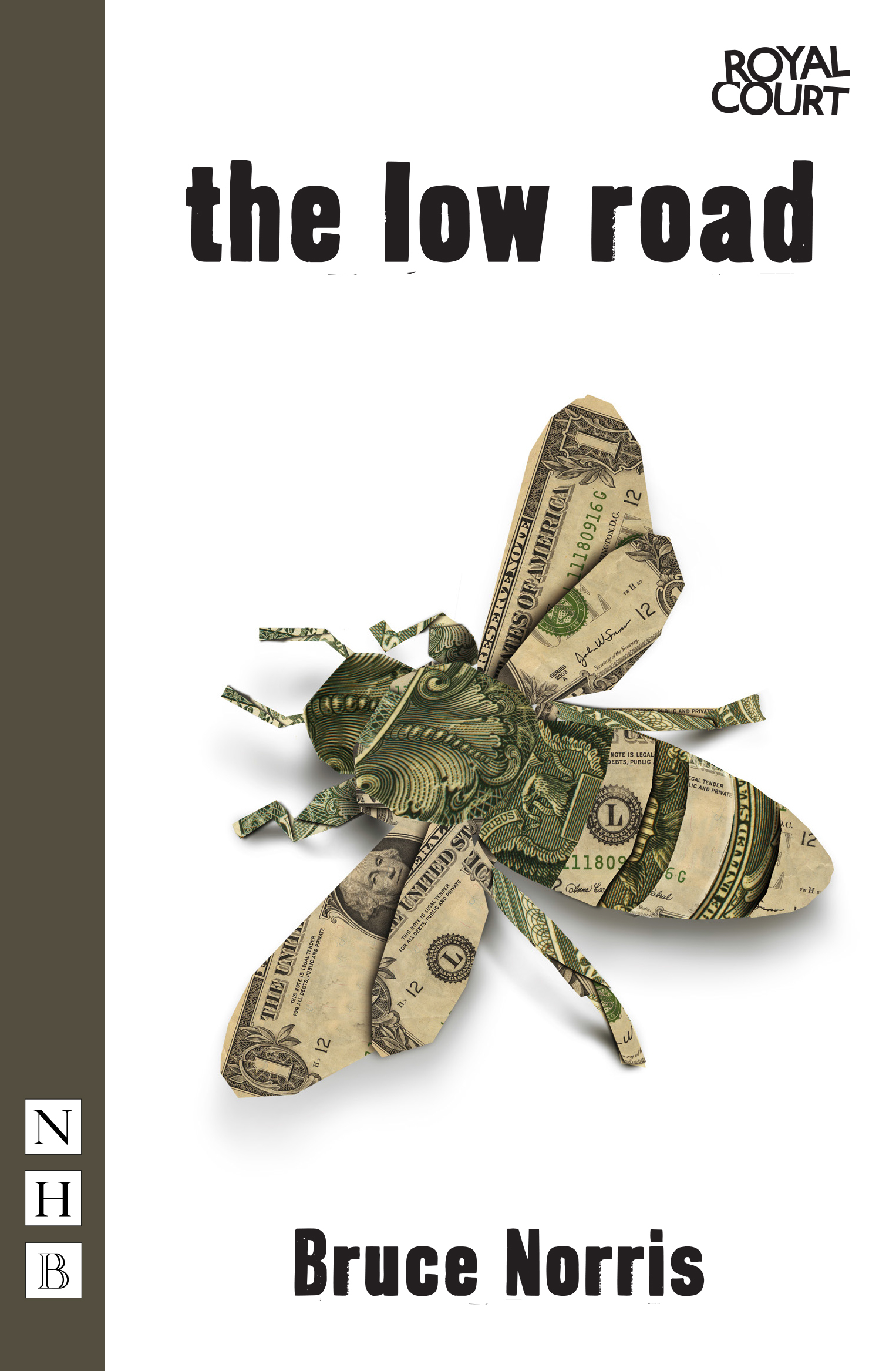
The clearest indicator of the quality of The Low Road at the Royal Court is that a scene in which twelve characters sit at a table debating the scriptural basis of capitalism is as entertaining as the expertly realised scenes of broader comedy. Employing inventive and hugely skilful physical means to tell the story of a foundling’s journey to (inadvertently) establish a banking dynasty, the cast move between costumes, characters and epochs with a rapidity that in lesser hands might be bewildering but in this brilliantly performed and realised production is simply accepted as occasionally breathtaking fait accompli. As well as being a superb piece of theatre technically, however, it is also a profound example of the use of theatre to explore political and moral problems in a way that engages head and heart while allowing the audience to be aware of their interactions.

In a piece which relies on the smooth working together of an ensemble on and off stage, it is slightly invidious to single out individuals. In the central role of Jim Trumpett, however, Johnny Flynn pulls off the feat of making a reprehensible chancer loveable while not concealing his baseness from us (even if it remains firmly hidden from the character’s awareness). Bill Paterson gives the narrative role of Adam Smith an amiable pomposity that allows his character to direct the audience to the interval while keeping the tension of the melodramatic cliffhanger intact. Similarly, Kobna Holdbrook-Smith gives the role of John Blanke a dignity and integrity which both he and the character seem to relish jeopardising. For her part, Ellie Kendrick clearly has enormous fun in her three roles, finding a physical intensity which is simultaneously completely aware and totally unconscious of its absurdity.

For me, though, the trio of pitch-perfect characterisations by Elizabeth Berrington deserve special acknowledgement. Whether portraying the generous dishonesty of a brothelkeeper (celebrating the subterfuge that ends the action with a cheery exclamation that justice has been done), the icy precision of an Economic Forum conference chair (‘And just to be clear, this is not the plenary session’) or the fragile delusion of an eighteenth-century philanthropist who wonders whether the first settlers didn’t go to America ‘partly for the unspoiled landscape’, Berrington is absolutely confident in her performance while never succumbing to the temptation to steal a scene. In a first-rate cast, she is a pleasure to watch.

None of this, of course, would work if the script and the direction were not superb. But they are. Dominic Cooke’s direction of a piece that could be incomprehensible is assured and meticulous. Bruce Norris’s script, meanwhile, always knows the line between poignance and sentimentality and clearly understands the Brechtian principle that in order to truly have engaged an audience they have to laugh at the characters’ tears and cry at their laughter. Norris is even brave enough to have one character speculate on the possibility that ‘a work of dramatic intention can prick our hearts by shewing us the humanity of those depicted’ – while playing such an idea for laughs. From both writer and director, the genius of the production is to commit to the moment and its contradictions inside and outside the action.

None of this should be read, however, as though there is nothing whatsoever to criticise in this production. Act One is an eighteenth-century romp whose foundlings and characters could have been lifted in their richness from Henry Fielding. Act Two, however, seemed to lose its way slightly as it tried to develop the themes of race and gender that the first raised while clearly leaving them subordinate to the central economic issue – namely ‘Tis one thing to admit the inescapable cruelty of nature, friend, but quite a different one to encourage it.’ In wrestling with the issues and finding a resolution to a complex plot, the laser-guided focus of the play dissipates slightly, the storytelling and analysis slightly less securely connected.

But though it doesn’t find clear answers, and even if at times the formulation of those questions takes second place to a dramatic tour de force, The Low Road is always asking (or trying to ask) the right questions. Emerging from the Royal Court on the high that follows witnessing a piece of drama that truly engages as well as entertains, the flagship stores of designer labels that encompass Sloane Square confront the alert audience member with concrete evidence that the dilemmas of western affluence are far from resolved. Do we, in the words of one character, ‘having crashed the car once […] want to hand the keys back to the same drunken driver?’

And if we do, do we first need to ask ourselves if we are the ones who will really pay the price? Sitting outside a café off the Kings Road, my sisters and I were served (politely and cheerfully) by a young black woman who shivered beneath the company-branded fleece she wore to serve overpriced (Fairtrade?) coffee in a bitter wind. ‘If you really want to make the world a better place,’ says one unpleasant character at the beginning of Act Two, ‘first thing you gotta do is help yourself.’ Easy for him to say – but where and how do we balance the cooperative with the competitive, as the final deus ex machina puts it.The Low Road does not have the answers but should provoke a great discussion of the questions. Probably over expensive coffee on the Kings Road. And the invisible hand so fulsomely extolled by Adam Smith won’t make that.

The Low Road by Bruce Norris, directed by Dominic Cooke at the Royal Court Theatre, Sloane Square, 23 March-11 May 2013. Text published by Nick Hern Books, price £9.99.

Then he saw her face…now she’s a Belieber?

Tags

, , , ,

Image

Justin Bieber went to the Anne Frank House last week and caused something of a controversy when his comment in the visitors’ book was released via a Tweet from the museum itself. For accuracy’s sake, here’s the text.

Image

As reported in a number of news outlets, the comment caused many of Bieber’s followers (and detractors) to attack the singer for being overly full of himself. In particular, it caused Emma Barnett in the Telegraph to write an indignant article under the intriguing headline ‘Justin Bieber doesn’t get to second-guess Anne Frank. Nobody does.’ 

Barnett takes Bieber to task for his ‘crass attempt to associate himself with one of the faces of the Holocaust’, recalling her memory of first visiting the Anne Frank House at age 10: ‘I still get chills thinking about my impressions of what I was about to discover, walking through the door into the cramped collection of rooms, tightly holding my mother’s hand.’

The business end of Barnett’s article, though, is in the final four paragraphs, where she outlines what I suspect are a representative set of attitudes under the outrage. To avoid any possibility of misrepresenting Barnett through clumsy paraphrasing, they are reproduced verbatim below.

Of course we don’t know if she would have been a ‘belieber’. The little girl inside of me hopes the wonderfully vibrant Anne Frank wouldn’t have stooped so low to be a cult follower of anything. She was a leader in my mind, not a follower. But I won’t be as crass as Bieber to try and even imagine her tastes or anything beyond those words she shared in her diary, her darling ‘Kitty’. 

What she wanted to let ‘Kitty’ know, (and then what Otto Frank deemed acceptable to share with the wider world when he published his daughter’s remarkable diary) is all we can and will ever know about Anne Frank. 

As you leave the Anne Frank Museum and write in the guestbook, most people I know almost don’t have any words. They often just share their sorrow, perhaps their own Holocaust story if they have one and express their praise and gratitude to the people who have kept Anne’s story alive. 

They certainly don’t write anything which is self-referential, nor attempt to guess what Anne would have been like had she been born to different generation. Justin Bieber needs to take note.

A few points. Firstly, as any visitor to the Anne Frank House would know, Anne was a keen follower of celebrity, as the pictures of film stars on her wall bear witness. As she noted in her diary on 11 July 1942 (just two days after the family moved to the attic: ‘Thanks to Father – who brought my entire postcard and film star collection here beforehand – and to a brush and a pot of glue, I was able to plaster the walls with pictures.’

The same passage, incidentally, is quoted in the downloadable guide to the museum, so one should be wary of the dismissive tone that Barnett adopts to explain Bieber’s comment as due to ‘one of the guides, who pointed out that Anne Frank was a fan of the pop culture of the time and that she might have been a fan of his.’ This seems to be a slight extrapolation of a standard part of the tour rather than the (implied) flattery of a famous visitor: so much, by the way, for ‘praise and gratitude to the people who have kept Anne’s story alive.’

The truth, though, is that we don’t know very much about what Anne thought about many things. As Barnett acknowledges, Anne’s diary was edited after the war by her father, who suppressed references to Anne’s sexuality and to the tensions in her relationship with her mother. Whatever the motivations for these choices, there can be little doubt that the version of the diary sold in the UK for much of the last sixty years has been The Diary of a Young Girl rather than (as it perhaps should be) The Diary of a Young Woman.

But the complexity doesn’t end there. On 29 March 1944, a broadcast by Gerrit Bolkestein, the Minister for Education in the Dutch Government-in-Exile, broadcast that ‘after the war a collection would be made of diaries and letters dealing with the war’ led Anne to rewrite and edit what she had written thus far, either for the official collection mentioned by Bolkestein or for a publication of her own. On 11 May, 1944, she wrote:

You’ve known for a long time that my greatest wish is to be a journalist, and later on, a famous writer. We’ll have to wait and see if these grand illusions (or delusions!) will ever come true, but till now I’ve had no lack of topics. In any case, after the war I’d like to publish a book called The Secret Annexe. It remains to be seen whether I’ll succeed, but my diary can serve as the basis.

From then on, not only was Anne writing with at least half an eye to posterity (there is, for example, a broader selection of themes than previously), she also edited and rewrote earlier sections. What we have of the diary for December 1942 to December 1943 is all from this period of rewriting. The authoritative Critical Edition of the Diary published by the Netherlands Institute for War Documentation in the 1980s puts all the alternative versions of all the entries alongside each other: a much less digestible and straightforward document than the paperback still (rightly) available from most bookshops. But this complexity means that everyone is creating an Anne of their own from the fragments left behind: Barnett is fooling herself if she thinks she isn’t ‘second-guessing’ Anne to some extent. Indeed, the final entry of Anne’s diary explains at length the extent to which she ‘second-guessed’ herself.

As I’ve told you, what I say is not what I feel, which is why I have a reputation for being a boy-chaser, a flirt, a smart aleck and a reader of romances. The happy-go-lucky Anne laughs, gives a flippant reply, shrugs her shoulders and pretends she couldn’t care less. The quiet Anne reacts in just the opposite way. If I’m being completely honest, I’ll have to admit that it does matter to me, that I’m trying very hard to change myself, but that I’m always up against a more powerful enemy.

Perhaps the most memorable quote from Anne’s diary is her comment on 5 April, 1944 (in reference to her literary ambitions, in the immediate wake of the Bolkestein broadcast) that ‘I want to be useful or bring enjoyment to all people, even those I’ve never met. I want to go on living even after my death!’ She certainly has: almost seventy years later, she is still famous and her diary is still the first introduction for many to the history of the Holocaust, though (as Barnett points out inadvertently) the Holocaust to a large extent happens ‘offstage’.

But this kind of fame comes at a price. Anne Michaels wrote in The Winter Vault that ‘we cling to the paintings from Theresienstadt, to a Dutch girl’s diary, because we need them to speak for every war child’s loss.’ But in making them speak for anything but their own fate and being, we make them into puppets for our own ends. Many of these ends are laudable – the work done by the Anne Frank House and the Anne Frank Trust, for example, in educating about the Holocaust, racism and (in)tolerance. Conversely, it might be argued that to derive an educational programme from the diary of a 13-15 year-old without her consent is to indulge in an editing of the past that is necessarily self-referential. We are all guilty of the same offence as Nathan Zuckerman in Philip Roth’s The Ghost Writer as he tries to persuade himself that a mysterious graduate student is actually Anne, survived and gone into hiding. ‘Alas,’ he writes, ‘I could not lift her out of her sacred book and make her a character in this life.’ Neither can we: we are all left with the blank knowledge that ‘Anne’s Diary Ends Here’.

I wonder whether Barnett would object to a photograph of Anne appearing on a Holocaust textbook? I suspect not, and yet for me the question this raises is to what extent the remarkable, inconsistent and talented young woman that Anne was is obscured by her placement within a view of the past that she could not consent to. Anne died in 1945, just days before the liberation of Belsen. We do not know the extent of her knowledge that she was one of the last victims of a campaign to murder the Jews of Europe. It had certainly not yet solidified into the historical edifice of ‘The Holocaust’. We also – and this is the tragedy when someone so talented dies so young – have no way of knowing how it might have changed her outlook. We all second-guess Anne, all the time. We have to, because we too must go on living after her death.

Quotations from Anne’s Diary are taken from Anne Frank: The Diary of a Young Girl, The Definitive Edition edited by Otto H. Frank and Mirjam Pressler, translated by Susan Massoty, published by Penguin in 2001.

If you need a monument…

Tags

, , , ,

Image

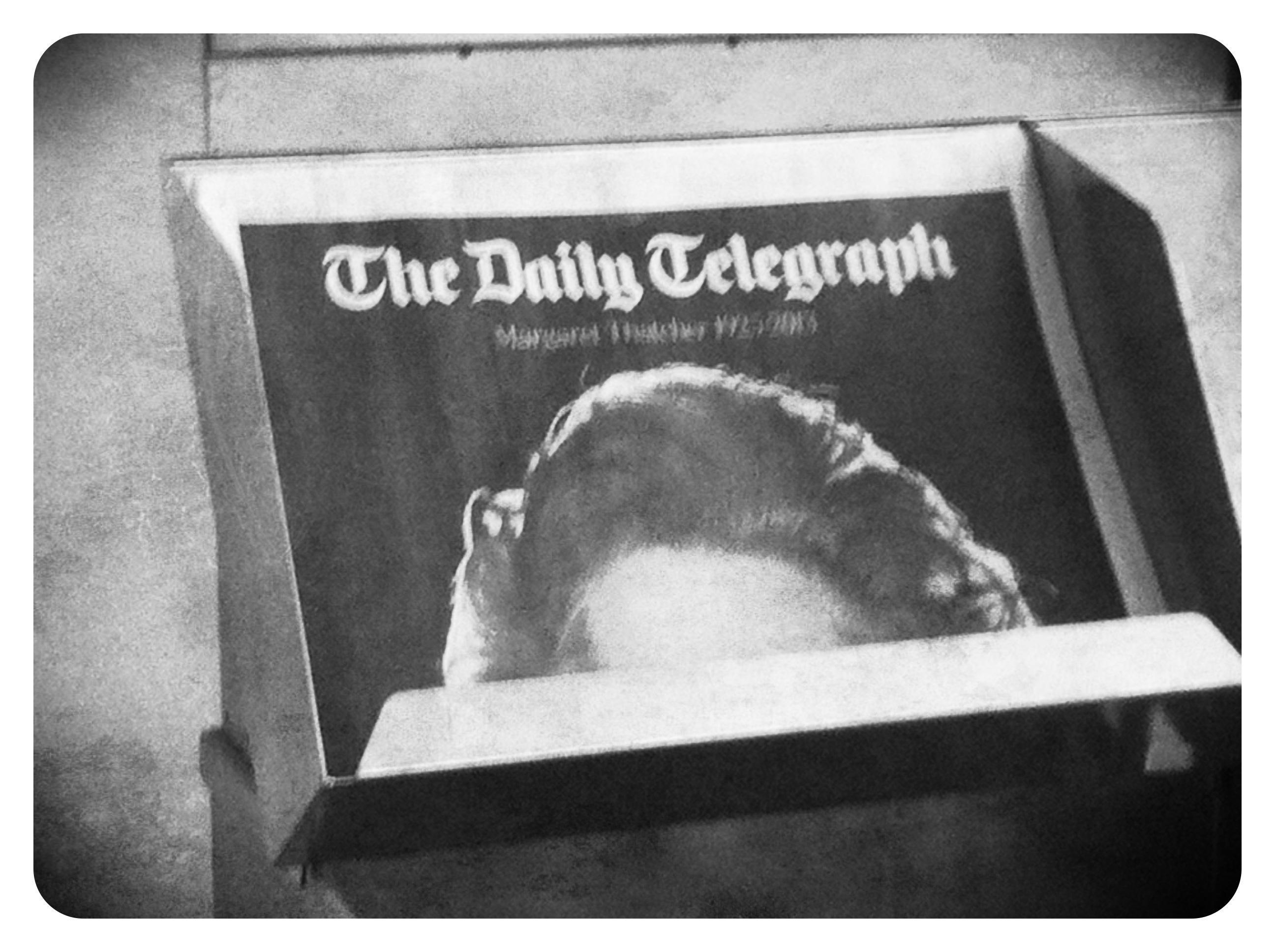
The death of Margaret Thatcher this week, aged 87, has predictably led to a re-opening of almost tribal divisions, in which a mawkish triumphalism has been equalled in unpleasantness only by the opposing frivolous vitriol. The irony of her famous pronouncement on entering Number 10 in 1979, promising that ‘Where there is discord, may we bring harmony’ has been more in evidence in the last few days than in the almost twenty-three years since she left office. Even in death, it seems, she divides the country in two: either ‘one of us’ or not.

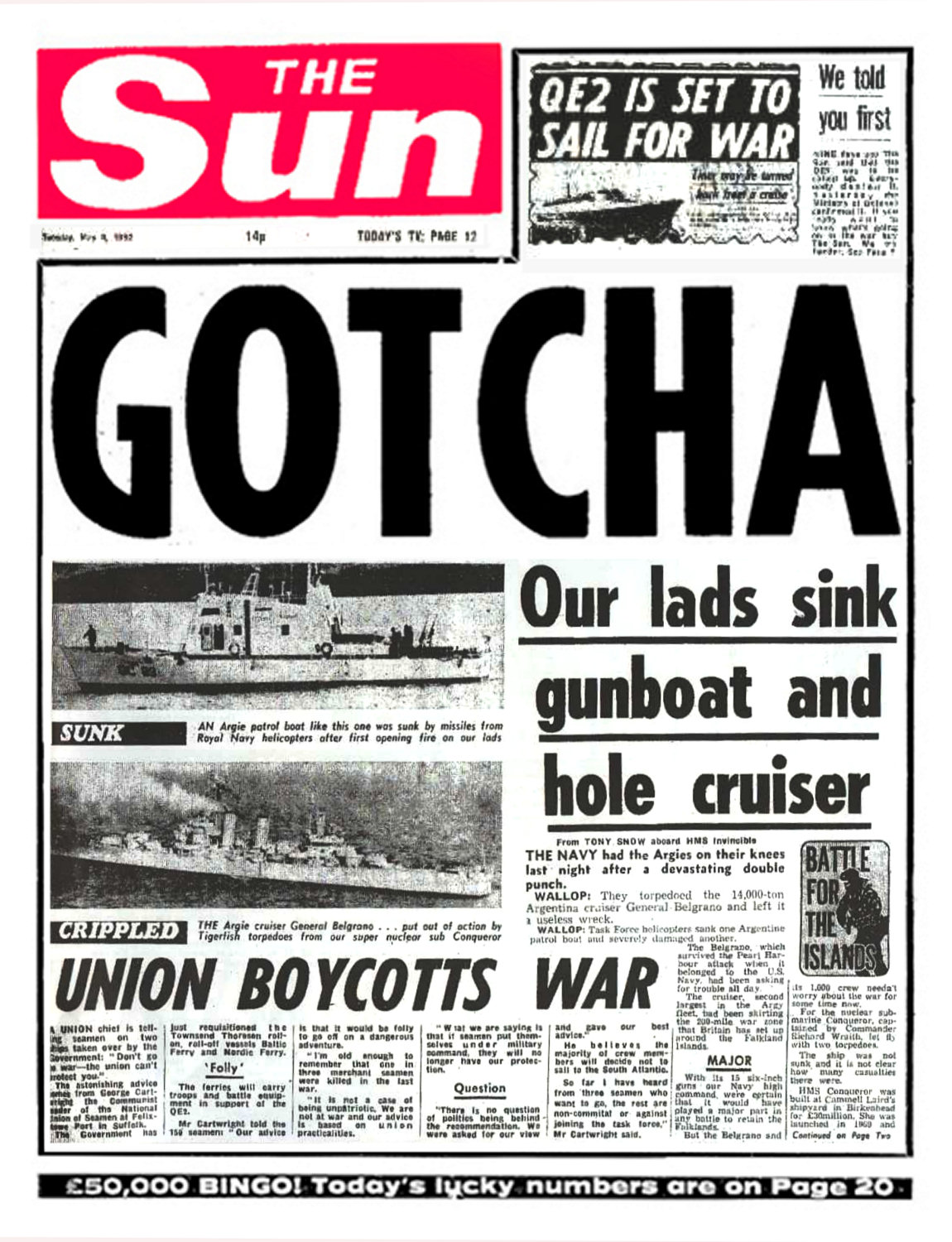
Personally, I am aware that the personalities and policies of the Thatcher years have shaped my life. The society we live in is defined by the confusion (so characteristic of the Thatcherite view) between individual interest and individual gain. Whether in the form of section 28 or the Poll Tax, energy privatisation or her failure to oppose Apartheid, the society she created (while denying there was any such thing) tended to be like her policies: nasty, brutish and short-sighted. And those who deplore the (admittedly unedifying) spectacle of jokes related to The Wizard of Oz ought to cast their minds back to 1982. How many of those asking the BBC to ban ‘Ding Dong the Witch is Dead’ this week complained at the Sun when it decided that ‘Gotcha’ was an appropriate summary of the deaths of Argentinean sailors?

Image

What has also struck me this week, however, has been the power of the symbol. The ingredients – a hairdo, a handbag, a particular shade of blue – are instantly recognisable: a true icon in that they continue to signify the meaning even (perhaps especially) in the absence of the content. There is particular irony in the resemblance of David Cameron (when kitted out as Thatcher) to Michael Heseltine.

Image

Christopher Wren’s epitaph (in St. Paul’s where Thatcher’s funeral will take place next week) ends with the words ‘Si monumentum requiris, circumspice’ – if you need a monument, look around. In the few days before her funeral, let’s look at her monument – in the NHS, in privatised and ineffective ‘public’ transport, in companies that perpetuate the ‘trickledown recession’ by not paying enough tax, in the lack of social housing, in the growing gap between rich and poor, even in the coarseness of the rhetoric surrounding her passing – and ask if we really like what we see. But let’s make it a true monument, by consigning the selfish and aggressive bluster to the past. The lady wasn’t for turning, but the world and the times must.

What’s Next?

Tags

, , , , ,

‘With high hope for the future, no prediction in regard to it is ventured.’ – Abraham Lincoln, Second Inaugural Address

Obama bw

If you haven’t read it yet, the article on the Guardian website by American lawyer and blogger Glenn Greenwald on the assassination of US citizens outside the US by the Obama Administration is sobering reading. Picking through the assumptions of the Department of Justice memorandum setting out the legal basis for such actions, Greenwald argues that the measures constitute ‘an authoritarian conflation of government accusations and valid proof of guilt.’ Greenwald sets out clearly and compellingly the legal and philosophical bases for this view, arguing that there is a depressing continuity between the Bush/Cheney years and the present administration. To twist a one-liner from The West Wing, the US at present seems to be setting itself up as Joe McCarthy with first-strike capability.

Greenwald is a lawyer and as such better equipped to draw these conclusions. What concerns me (in both senses) is the challenge to my mental picture of Obama, whose election has (twice) made me think – or rather, hope – that the world had turned some kind of corner. The image that heads this post was a summary of how many of us felt on November 5, 2008 when, in the early hours of the morning (for those of us watching from the UK) the new President-elect stepped out from backstage and into history as he gave his victory speech. Amidst the applause, he said

It’s the answer that led those who’ve been told for so long by so many to be cynical and fearful and doubtful about what we can achieve to put their hands on the arc of history and bend it once more toward the hope of a better day. It’s been a long time coming, but tonight, because of what we did on this date in this election at this defining moment change has come to America.

Two months later, at his inauguration, we listened as he repeated this theme, promising that he would lead Americans to ‘choose [their] better history; to carry forward that precious gift, that noble idea passed on from generation to generation: the God-given promise that all are equal, all are free, and all deserve a chance to pursue their full measure of happiness.’ Whether any mortal could have lived the promise of such rhetoric is open to question: but we hoped.

The projection of Obama as, though perhaps compromised, fundamentally on the side of the angels is the point at issue here. The man who movingly spoke of the need for gun control in the wake of the Connecticut school shootings is also, it appears, a man who holds weekly meetings on ‘Terror Tuesdays’ to select a US citizen living abroad for assassination. Greenwald puts it starkly: ‘The power of accuser, prosecutor, judge, jury and executioner are all consolidated in this one man, and those powers are executed in the dark.’

I don’t want to believe that this is the ‘real’ Obama, and that I have been dazzled by propaganda, lulled into romantic complacency. In addition, I know that historical reputation is always contingent on what happens next, which no-one can tell you for sure until it’s already happened. And even then it is always, as Zhou Enlai reportedly said of the French Revolution, ‘too early to tell’ what an event means or a person has accomplished. Sometimes, as with JFK, the birds come home to roost after the person themselves has gone, meaning we have to reconcile the promise of the past with our disappointment at its consequences. It is almost always the hope that things will be different next time that allows us to do so.

In this case, however, it needn’t be too late: the next time is now, the change in the future is still at hand, a better history can still be chosen, even if what has been done cannot be undone. We have to hope that the disclosure of these documents makes those responsible look again at their actions and stop. Once again, Mr. President, you need to give us hope for a change.

On Holocaust Memorial Day, 2013

Tags

, , ,

Judenrampe 2009

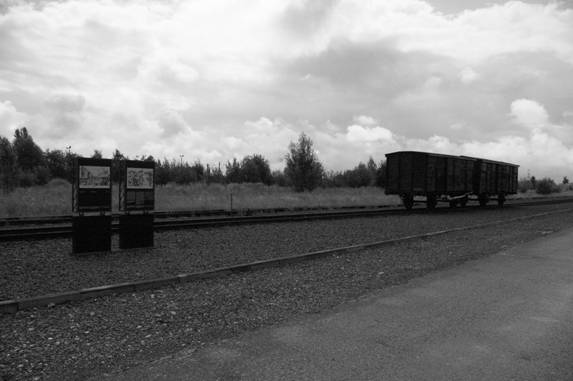
The ‘Alte Judenrampe’ between Auschwitz I and Auschwitz II-Birkenau: used between 1942 and 1944, hundreds of thousands of deportees arrived here. Photo: author, 2009.

As an academic, my research is concerned with the questions of representation associated with the Holocaust and its aftermath. To do so, I employ the term mythology in the Barthesian sense of ‘a language in which other things are spoken.’ In other words, seeing the representation of the Holocaust as more and more a prism through which other stories and concerns are addressed. Speaking of the Holocaust in Israel is to engage with the foundation of the state; in Britain, the Holocaust and World War II are important signifiers in an ongoing search for a post-imperial role between the United States and Europe; in Poland, the difficulty and controversy in talking about the Holocaust illustrate the ongoing search for an articulation of Polish wartime history that reconciles the facts with the sensibilities of those involved. In all three cases, the Holocaust is a major component of the search for a ‘usable’ past. As Robert Eaglestone observed in The Holocaust and the Postmodern (Oxford 2004) the Holocaust is ‘something wider, more significant, and, precisely because it is so all-pervasive, very much harder to pin down: [part of] a sense of “who we are” and “how the world is for us”’

But focusing exclusively on this sense of the Holocaust’s historical importance and cultural centrality – Holocaust Memorial Day is the only pan-European memorial day, for example – is to (potentially) miss an important truth. In a short and trenchant analysis of Postmodernism and Holocaust Denial (Duxford 2001), Eaglestone interrupts his characteristic eloquence to remind us that ‘writing and reading about the Holocaust is, and ought to be, distressing.’ He develops a comparison to bring home to the reader what we are talking about – mass murder – and its victims and perpetrators, reminding the reader of accounts of killings in which uniforms were described as ‘saturated with blood’.

So, compare: think about getting blood on your clothes from a nosebleed: think how much, much more blood – the blood of the victims – would ‘saturate with blood’ a thick military uniform. On one day. And the killings, of all sorts, lasted years. (p. 29)

Holocaust Memorial Day serves for me a similar purpose to Eaglestone’s comparison – which he immediately concedes is ‘not even really a comparison.’ It reminds me that fundamentally in researching and teaching about the Holocaust we are remembering the dead and asking that such things never happen again – even if the latter half of the twentieth century and opening decade of the twenty-first suggest that this lesson has been only imperfectly heard and hardly learnt at all. The knowledge that seeing this as a failure is in itself a kind of progress is a hollow sort of satisfaction, though it is better than none at all.

I use ‘mythology’ for a variety of reasons, some of which are set out above. In addition, though, it attracted me because it addressed the kind of incomprehension and sadness I feel when I engage with testimony or images that move or disturb me. To term the Holocaust a modern mythology allows me to reconcile the paradoxes inherent in trying to explain that which will not be explained, and removing any possibility that it might be explained away. Myths are not there to be explained, but instead to be heard: as an early collection of Holocaust literature put it, ‘A whirlwind cannot be taught, it must be experienced.’ And we are left with the knowledge that since we have not (for the most part, thank goodness) experienced it all we can do is try to teach it.

But there are different kinds of teaching. The following excerpt from an eyewitness account of a mass killing in Ukraine in 1942 has made me wonder – still makes me wonder – how we face the apocalypse and if there is a meaning to be found.

 The father held the ten-year-old boy by the hand speaking softly to him. The boy was struggling to hold back his tears. The father pointed a finger at the sky and seemed to be explaining something to him.

More than once, while teaching groups of first-year undergraduates with this and other documents, students began to cry and apologised. It is important to remember that in the face of such things tears need no apology: we should be upset, we should cry, we should mourn. And then we should make sure that we do what we can to make the world better. God willing.

A Presence of the Idea of Her: The New Royal Portrait

Tags

, , , ,

‘I think there were two reasons why I wanted an abstract painting. One is that I do not like looking at images of myself, the second reason is because I don’t like, to be truthful, most representational portraits I see nowadays. What I wanted was the presence of the idea of me, not of a record of the whole of my face that I don’t much like.’ – A. S. Byatt

 The first official portrait of Catherine, Duchess of Cambridge, by the artist Paul Emsley, was unveiled last week at the National Portrait Gallery, to almost universal disdain. In case you haven’t been near a newspaper or screen in the intervening period, here it is:

 ImageFigure 1: Catherine, Duchess of Cambridge. Paul Emsley, 2013. NPG 6956.

 The responses to the picture have been described as polarised, though I’ve seen (or heard) little that is positive about it. The Daily Mail described it as ‘rotten’ and in the Independent Michael Glover described it as ‘catastrophic’: ‘little other than a face […] which is beginning to look a touch dropsical.’ Charlotte Higgins in the Guardian said that the image transformed the sitter from ‘a pretty young woman with an infectious smile’ into ‘something unpleasant from the Twilight franchise’.

Pop culture references always set off alarm bells for me, raising the suspicion that the writer wants me to respond before (or instead of) thinking. And the snide tone of comments on Facebook and Twitter made me still more uneasy. In particular, the update that ‘[X] thought it showed great foresight to paint what the Duchess will look like after she’s given birth’ prompted me to give some serious thought about what was going on.

The term portrait is deceptive in its neatness. Like all ideas and practices with such an extended heritage, it has mutated and shifted, and carries with it the complexities of its previous incarnations. The criteria that one might use to either evaluate or even define a portrait – likeness, identity, representation – are ambiguous, muddying rather than clarifying the questions, let alone the answers. The notion of a ‘successful’ portrait makes things more difficult still, relying as it does on competing ideas about what or who a sitter ‘is’ both to themselves and others, or even what it means to represent someone. Even a short tour through the National Portrait Gallery presents these issues starkly.

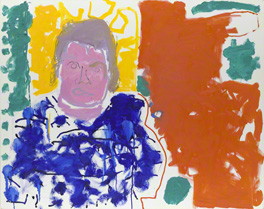
For example, just a few metres down the corridor from the Emsley portrait (as I’m going to refer to it from now on) is Patrick Heron’s 1997 portrait of the novelist A. S. Byatt.

ImageFigure 2: A.S. Byatt (Portrait of A S Byatt; Red, Yellow, Green and Blue: 24 September 1997. Patrick Heron, 1997. NPG 6414.

As a likeness, this is clearly not intended to assist Byatt in, say, being identified by officialdom (though how many of us think we look like our passport photos?) As Byatt’s comment at the head of this piece makes clear, however, it is something else: a statement by artist, sitter and institution about what is important about Byatt. It is a site of debate about what Paul Moorhouse has termed the ‘veracity of the relationship between the subject and the depiction’ and the result of a process in which, as Peter Burke puts it, ‘artist and sitter generally colluded.’ Roland Barthes provided a characteristically loquacious summary of these issues in Camera Lucida, writing that in the portrait ‘I am at the same time: the one I think I am, the one I want others to think I am, the one the [artist] thinks I am, and the one he makes use of to exhibit his art.’ The tensions in this process are laid bare in Imagined Lives, a collection of stories by contemporary writers to imagine the antecedents of ‘unknown’ portraits in the NPG’s collection.  As Tarnya Cooper writes in her concluding essay, they are ‘lost souls whose quest for immortality has been only partially successful.’

Taking this idea of the portrait as a locus of competing projections of identity as a starting point seems to me to raise some more interesting questions than whether we ‘like’ the image or not. (Leaving aside the question of whether a binary like/dislike is a sufficiently refined tool with which to approach a piece of art.)

Firstly: why do we seem to assume that the subject is not in control of the depiction? In their essays on the depiction of the Queen for a Jubilee Exhibition in 2012, David Cannadine and Paul Moorhouse both draw attention to the problems of a situation where ‘the sheer quantity of visual information about the British monarchy is greater than ever, more easily accessible and harder to regulate.’ While this is true – and the Leveson enquiry last year asked difficult questions about both accessibility and regulation – this portrait is a different kind of statement. The result of a commission and co-operation between an artist with an extensive portfolio, a sitter with a degree in art history, and an institution with centuries-long experience of moulding public response, it seems unlikely that the picture is one that none of them predicted. Presumably, in fact, this portrait is at least intended to do something. It is certainly much more interesting to assume this is the case, because we can then ask what are the expectations /narratives that it seems to be contradicting or frustrating? The answer (I suggest) is in the headlines.

Michael Glover’s piece in the Independent is entitled ‘Paul Emsley’s Duchess of Cambridge portrait is catastrophic’. The sub-heading is: ‘The first official portrait makes Kate Middleton’s cheeks look hamsterish, and her face saggy and a touch dropsical, writes Michael Glover’. There is a clear tension here between ‘Catherine, Duchess of Cambridge’ (as the NPG lists the portrait) and ‘Kate’. In the Guardian, we find the same tension, reversed: Charlotte Higgins’s piece is ‘Kate’s portrait – straight from the Twilight franchise’ and the sub-heading: ‘The Duchess of Cambridge’s official portrait, by Paul Emsley, shows her washed-out, heavy-lidded and seemingly fanged’. So why has this image got everyone’s titles in a twist?

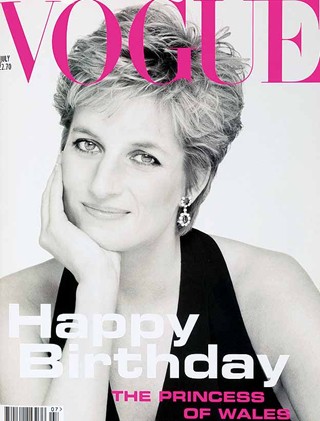
An important clue is on her right ear in the portrait: an earring, identified by the Daily Mail as belonging to Diana, Princess of Wales and featured in her appearance on the cover of Vogue in 1994:

Image Figure 3: Vogue, July 1994. Cover photo by Patrick Demarchelier.

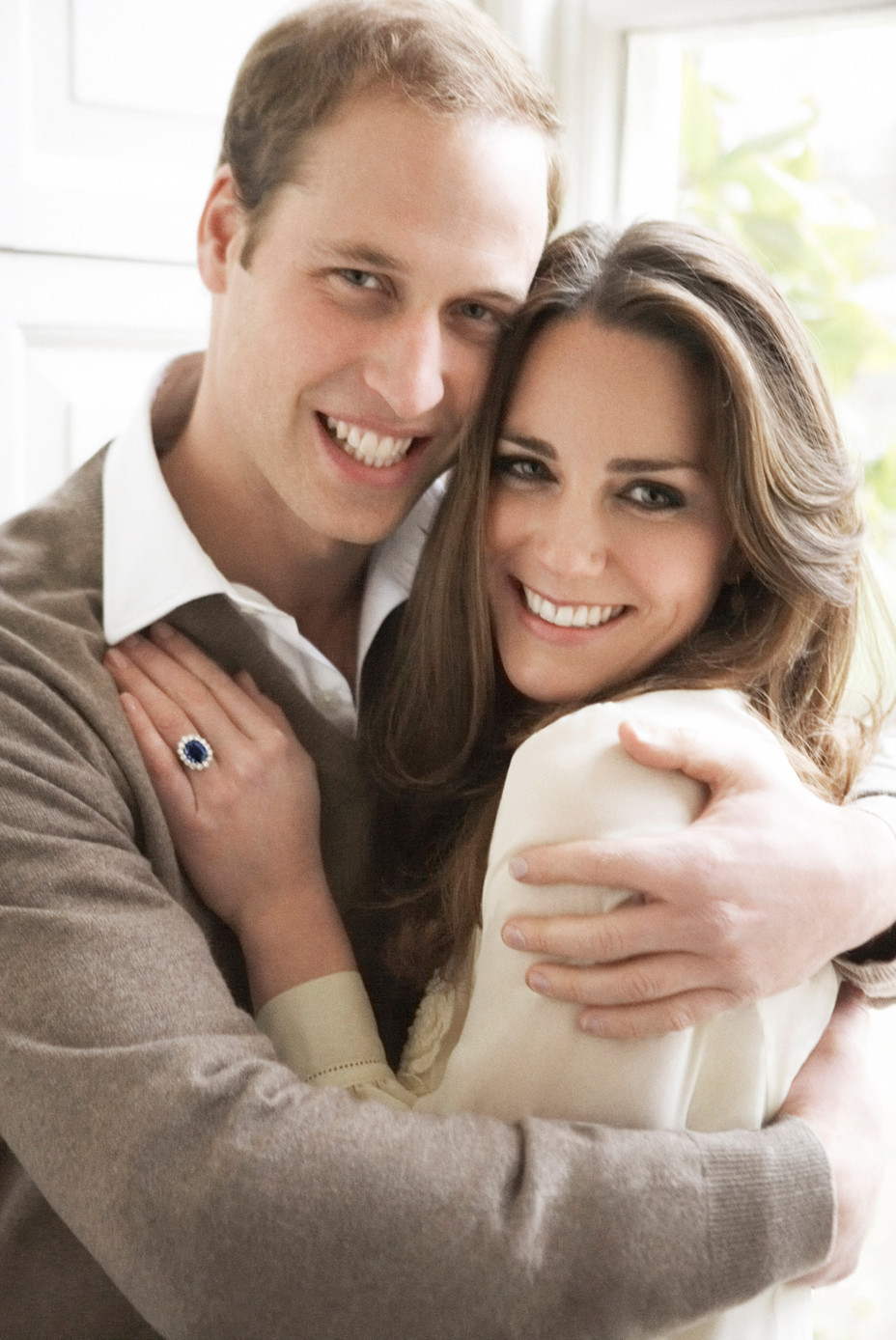
Diana’s jewellery has been a big part of the image of ‘Kate’ in the last couple of years. In addition to the news coverage of the use by the couple of Diana’s engagement ring, the engagement portraits of the Royal couple (by Mario Testino) featured the ring (which incidentally bears more than a passing similarity to the earrings) in prominent part of the composition.

ImageFigure 4: Their Royal Highnesses the Duke and Duchess of Cambridge. Engagement portrait, Mario Testino, London 2010.

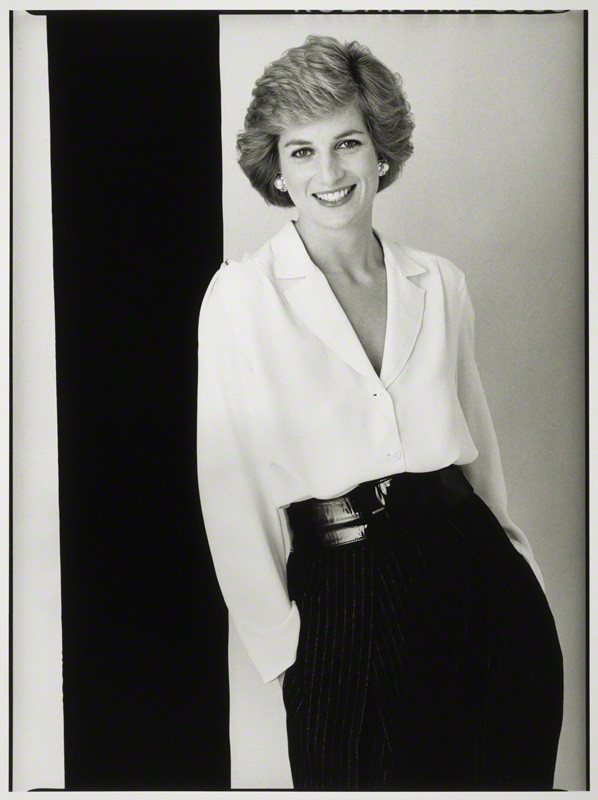
The beaming and girlish ‘Kate’ – enfolded in her fiance’s arms – is meant to recall her late mother-in-law: the angle and pose emphasise the similarities in facial structure, and the smiles are almost identical: compare with David Bailey’s 1988 image of Diana.

ImageFigure 5: Diana, Princess of Wales. David Bailey, 1988. (NPG P397)

Like Diana, ‘Kate’ looks straight into the camera: what kind of communication this is may be in doubt, but it is a communication.

In the new portrait, however, ‘Kate’ is no longer: instead ‘the Duchess’ gazes slightly out of frame, amused at a joke which we are not invited to share. Perhaps appropriately, this is a bid to create her own image rather than submit to the images of others, to impose the presence of her own idea of her. Whether that attempt is successful, of course, is another matter entirely. But neither she nor we can know that.

Bibliography

Roland Barthes (trans. Richard Howard), Camera Lucida: Reflections on Photography, Vintage Classics, London 2000 (French 1980)

Peter Burke, Eyewitnessing: The Uses of Images as Historical Evidence, Reaktion Books, London 2001

Media reaction:

Rebecca English, ‘I’m thrilled! Kate puts on a brave face as she sees first official portrait critics are calling ‘rotten’’, Daily Mail, 11 January 2013, retrieved on 14 January 2013 from http://www.dailymail.co.uk/news/article-2260655/Kate-Middleton-Rotten-official-portrait-Duchess-Cambridge-artist-Paul-Emsley-unveiled.html

Michael Glover, ‘Paul Emsley’s Duchess of Cambridge portrait is catastrophic’, The Independent, 11 January 2013, retrieved on 14 Janaury 2013 from http://www.independent.co.uk/arts-entertainment/art/news/michael-glover-paul-emsleys-duchess-of-cambridge-portrait-is-catastrophic-8448116.html

Charlotte Higgins, ‘Kate’s portrait – straight from the Twilight franchise’, The Guardian, 11 January 2013, retrieved on 14 January 2013 from http://www.guardian.co.uk/culture/charlottehigginsblog/2013/jan/11/kate-portrait-twilight-paul-emsley

National Portrait Gallery resources/publications

Case-study: Dame A. S. Byatt, retrieved on 14 January 2013 from

http://www.npg.org.uk/collections/new/commissioning-portraits/the-commissioning-process/case-study-dame-as-byatt.php

Imagined Lives: Portraits of unknown people. Fictional character sketches by John Banville, Tracy Chevalier, Julian Fellowes, Alexander McCall Smith, Terry Pratchett, Sarah Singleton, Joanna Trollope, Minette Walters, National Portrait Gallery, London 2011.

http://www.npg.org.uk/business/publications/imagined-lives-portraits-of-unknown-people.php

Paul Moorhouse, The Queen: Art & Image, National Portrait Gallery, London 2012

http://www.npg.org.uk/business/publications/the-queen-art-and-image.php