‘I think there were two reasons why I wanted an abstract painting. One is that I do not like looking at images of myself, the second reason is because I don’t like, to be truthful, most representational portraits I see nowadays. What I wanted was the presence of the idea of me, not of a record of the whole of my face that I don’t much like.’ – A. S. Byatt
The first official portrait of Catherine, Duchess of Cambridge, by the artist Paul Emsley, was unveiled last week at the National Portrait Gallery, to almost universal disdain. In case you haven’t been near a newspaper or screen in the intervening period, here it is:
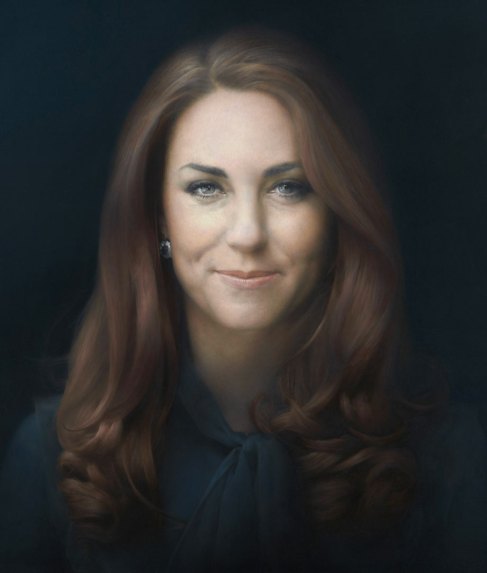 Figure 1: Catherine, Duchess of Cambridge. Paul Emsley, 2013. NPG 6956.
The responses to the picture have been described as polarised, though I’ve seen (or heard) little that is positive about it. The Daily Mail described it as ‘rotten’ and in the Independent Michael Glover described it as ‘catastrophic’: ‘little other than a face […] which is beginning to look a touch dropsical.’ Charlotte Higgins in the Guardian said that the image transformed the sitter from ‘a pretty young woman with an infectious smile’ into ‘something unpleasant from the Twilight franchise’.
Pop culture references always set off alarm bells for me, raising the suspicion that the writer wants me to respond before (or instead of) thinking. And the snide tone of comments on Facebook and Twitter made me still more uneasy. In particular, the update that ‘[X] thought it showed great foresight to paint what the Duchess will look like after she’s given birth’ prompted me to give some serious thought about what was going on.
The term portrait is deceptive in its neatness. Like all ideas and practices with such an extended heritage, it has mutated and shifted, and carries with it the complexities of its previous incarnations. The criteria that one might use to either evaluate or even define a portrait – likeness, identity, representation – are ambiguous, muddying rather than clarifying the questions, let alone the answers. The notion of a ‘successful’ portrait makes things more difficult still, relying as it does on competing ideas about what or who a sitter ‘is’ both to themselves and others, or even what it means to represent someone. Even a short tour through the National Portrait Gallery presents these issues starkly.
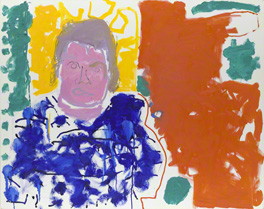
For example, just a few metres down the corridor from the Emsley portrait (as I’m going to refer to it from now on) is Patrick Heron’s 1997 portrait of the novelist A. S. Byatt.
 Figure 2: A.S. Byatt (Portrait of A S Byatt; Red, Yellow, Green and Blue: 24 September 1997. Patrick Heron, 1997. NPG 6414.
As a likeness, this is clearly not intended to assist Byatt in, say, being identified by officialdom (though how many of us think we look like our passport photos?) As Byatt’s comment at the head of this piece makes clear, however, it is something else: a statement by artist, sitter and institution about what is important about Byatt. It is a site of debate about what Paul Moorhouse has termed the ‘veracity of the relationship between the subject and the depiction’ and the result of a process in which, as Peter Burke puts it, ‘artist and sitter generally colluded.’ Roland Barthes provided a characteristically loquacious summary of these issues in Camera Lucida, writing that in the portrait ‘I am at the same time: the one I think I am, the one I want others to think I am, the one the [artist] thinks I am, and the one he makes use of to exhibit his art.’ The tensions in this process are laid bare in Imagined Lives, a collection of stories by contemporary writers to imagine the antecedents of ‘unknown’ portraits in the NPG’s collection. As Tarnya Cooper writes in her concluding essay, they are ‘lost souls whose quest for immortality has been only partially successful.’
Taking this idea of the portrait as a locus of competing projections of identity as a starting point seems to me to raise some more interesting questions than whether we ‘like’ the image or not. (Leaving aside the question of whether a binary like/dislike is a sufficiently refined tool with which to approach a piece of art.)
Firstly: why do we seem to assume that the subject is not in control of the depiction? In their essays on the depiction of the Queen for a Jubilee Exhibition in 2012, David Cannadine and Paul Moorhouse both draw attention to the problems of a situation where ‘the sheer quantity of visual information about the British monarchy is greater than ever, more easily accessible and harder to regulate.’ While this is true – and the Leveson enquiry last year asked difficult questions about both accessibility and regulation – this portrait is a different kind of statement. The result of a commission and co-operation between an artist with an extensive portfolio, a sitter with a degree in art history, and an institution with centuries-long experience of moulding public response, it seems unlikely that the picture is one that none of them predicted. Presumably, in fact, this portrait is at least intended to do something. It is certainly much more interesting to assume this is the case, because we can then ask what are the expectations /narratives that it seems to be contradicting or frustrating? The answer (I suggest) is in the headlines.
Michael Glover’s piece in the Independent is entitled ‘Paul Emsley’s Duchess of Cambridge portrait is catastrophic’. The sub-heading is: ‘The first official portrait makes Kate Middleton’s cheeks look hamsterish, and her face saggy and a touch dropsical, writes Michael Glover’. There is a clear tension here between ‘Catherine, Duchess of Cambridge’ (as the NPG lists the portrait) and ‘Kate’. In the Guardian, we find the same tension, reversed: Charlotte Higgins’s piece is ‘Kate’s portrait – straight from the Twilight franchise’ and the sub-heading: ‘The Duchess of Cambridge’s official portrait, by Paul Emsley, shows her washed-out, heavy-lidded and seemingly fanged’. So why has this image got everyone’s titles in a twist?
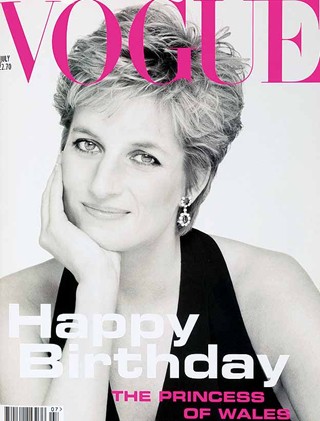
An important clue is on her right ear in the portrait: an earring, identified by the Daily Mail as belonging to Diana, Princess of Wales and featured in her appearance on the cover of Vogue in 1994:
 Figure 3: Vogue, July 1994. Cover photo by Patrick Demarchelier.
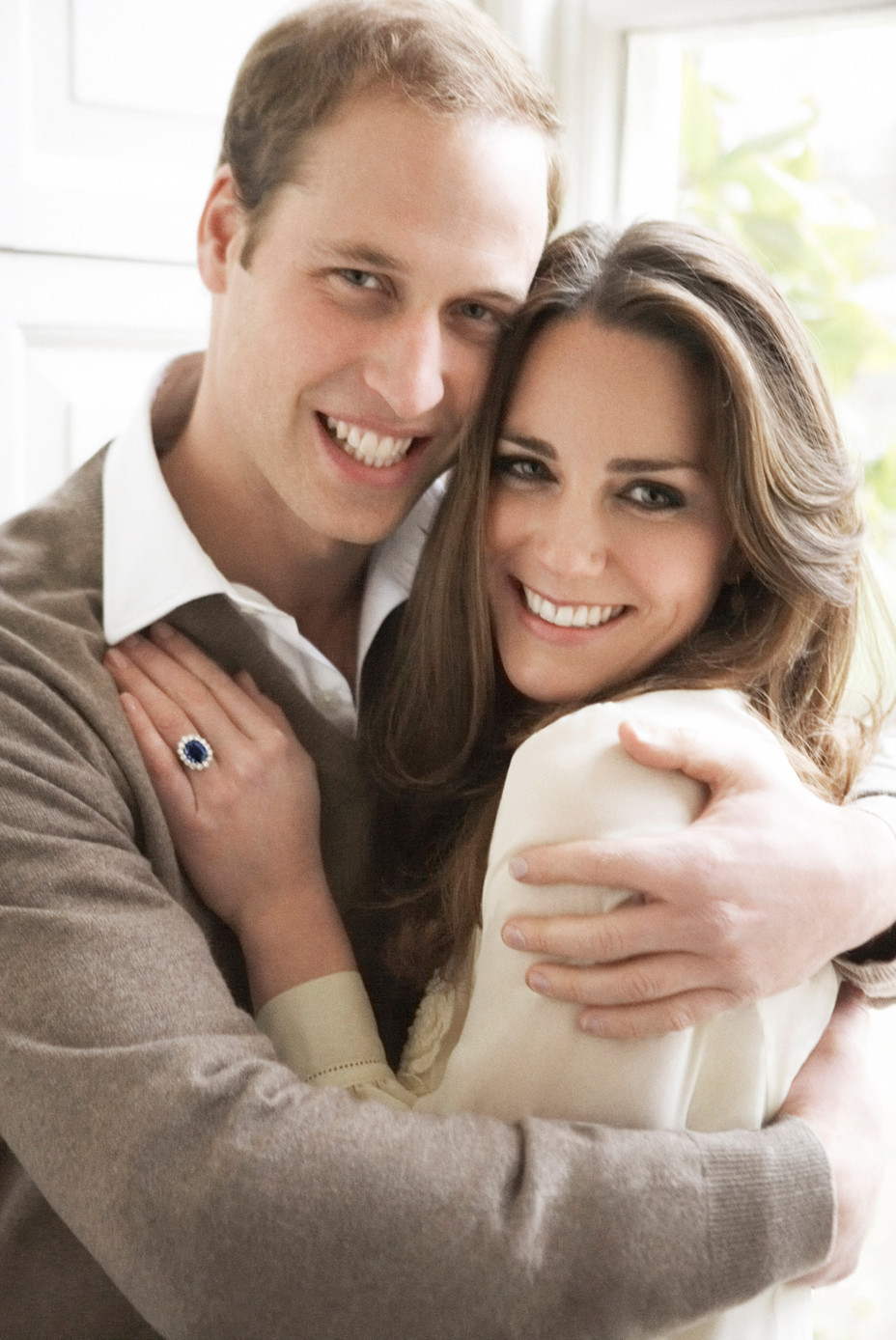
Diana’s jewellery has been a big part of the image of ‘Kate’ in the last couple of years. In addition to the news coverage of the use by the couple of Diana’s engagement ring, the engagement portraits of the Royal couple (by Mario Testino) featured the ring (which incidentally bears more than a passing similarity to the earrings) in prominent part of the composition.
 Figure 4: Their Royal Highnesses the Duke and Duchess of Cambridge. Engagement portrait, Mario Testino, London 2010.
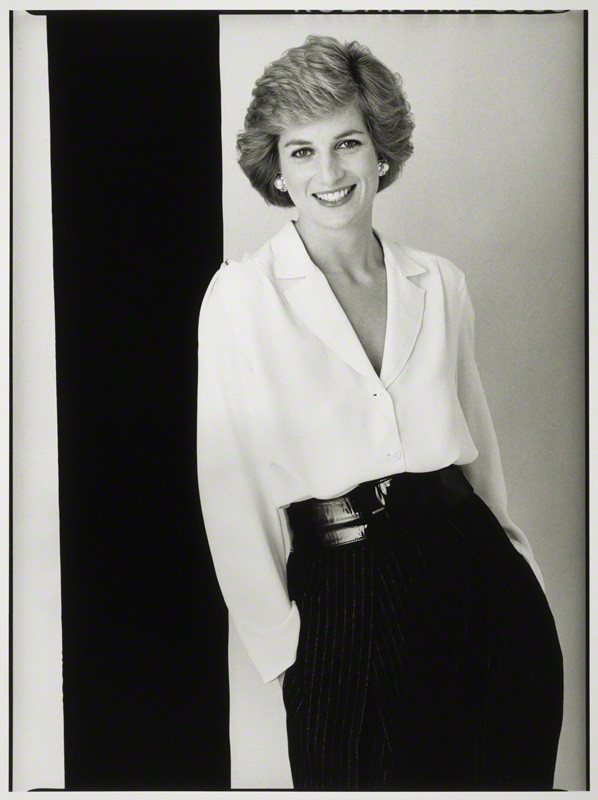
The beaming and girlish ‘Kate’ – enfolded in her fiance’s arms – is meant to recall her late mother-in-law: the angle and pose emphasise the similarities in facial structure, and the smiles are almost identical: compare with David Bailey’s 1988 image of Diana.
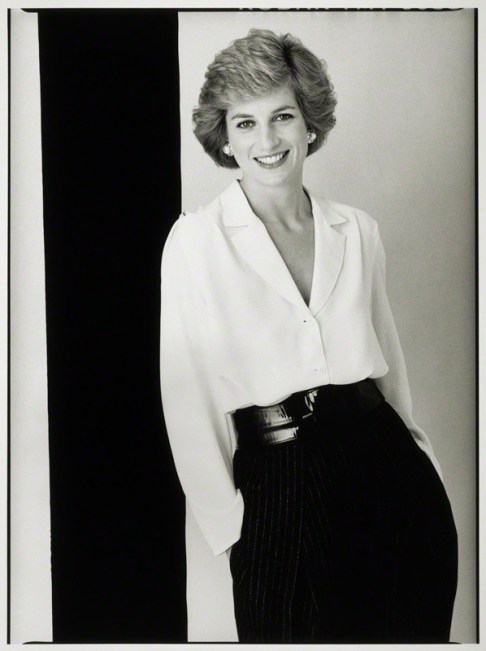 Figure 5: Diana, Princess of Wales. David Bailey, 1988. (NPG P397)
Like Diana, ‘Kate’ looks straight into the camera: what kind of communication this is may be in doubt, but it is a communication.
In the new portrait, however, ‘Kate’ is no longer: instead ‘the Duchess’ gazes slightly out of frame, amused at a joke which we are not invited to share. Perhaps appropriately, this is a bid to create her own image rather than submit to the images of others, to impose the presence of her own idea of her. Whether that attempt is successful, of course, is another matter entirely. But neither she nor we can know that.
Bibliography
Roland Barthes (trans. Richard Howard), Camera Lucida: Reflections on Photography, Vintage Classics, London 2000 (French 1980)
Peter Burke, Eyewitnessing: The Uses of Images as Historical Evidence, Reaktion Books, London 2001
Media reaction:
Rebecca English, ‘I’m thrilled! Kate puts on a brave face as she sees first official portrait critics are calling ‘rotten’’, Daily Mail, 11 January 2013, retrieved on 14 January 2013 from http://www.dailymail.co.uk/news/article-2260655/Kate-Middleton-Rotten-official-portrait-Duchess-Cambridge-artist-Paul-Emsley-unveiled.html
Michael Glover, ‘Paul Emsley’s Duchess of Cambridge portrait is catastrophic’, The Independent, 11 January 2013, retrieved on 14 Janaury 2013 from http://www.independent.co.uk/arts-entertainment/art/news/michael-glover-paul-emsleys-duchess-of-cambridge-portrait-is-catastrophic-8448116.html
Charlotte Higgins, ‘Kate’s portrait – straight from the Twilight franchise’, The Guardian, 11 January 2013, retrieved on 14 January 2013 from http://www.guardian.co.uk/culture/charlottehigginsblog/2013/jan/11/kate-portrait-twilight-paul-emsley
National Portrait Gallery resources/publications
Case-study: Dame A. S. Byatt, retrieved on 14 January 2013 from
http://www.npg.org.uk/collections/new/commissioning-portraits/the-commissioning-process/case-study-dame-as-byatt.php
Imagined Lives: Portraits of unknown people. Fictional character sketches by John Banville, Tracy Chevalier, Julian Fellowes, Alexander McCall Smith, Terry Pratchett, Sarah Singleton, Joanna Trollope, Minette Walters, National Portrait Gallery, London 2011.
http://www.npg.org.uk/business/publications/imagined-lives-portraits-of-unknown-people.php
Paul Moorhouse, The Queen: Art & Image, National Portrait Gallery, London 2012
http://www.npg.org.uk/business/publications/the-queen-art-and-image.php



 framingthequestion